India-Bangladesh Relations: Diplomatic Engagement And Bilateral Talks
Source:eurasiareview ↗
Why It Matters
Understanding India-Bangladesh diplomatic ties, water-sharing treaties, and regional geopolitics is vital for West Bengal civil services aspirants due to shared borders and deep cultural-economic linkages.
Summary
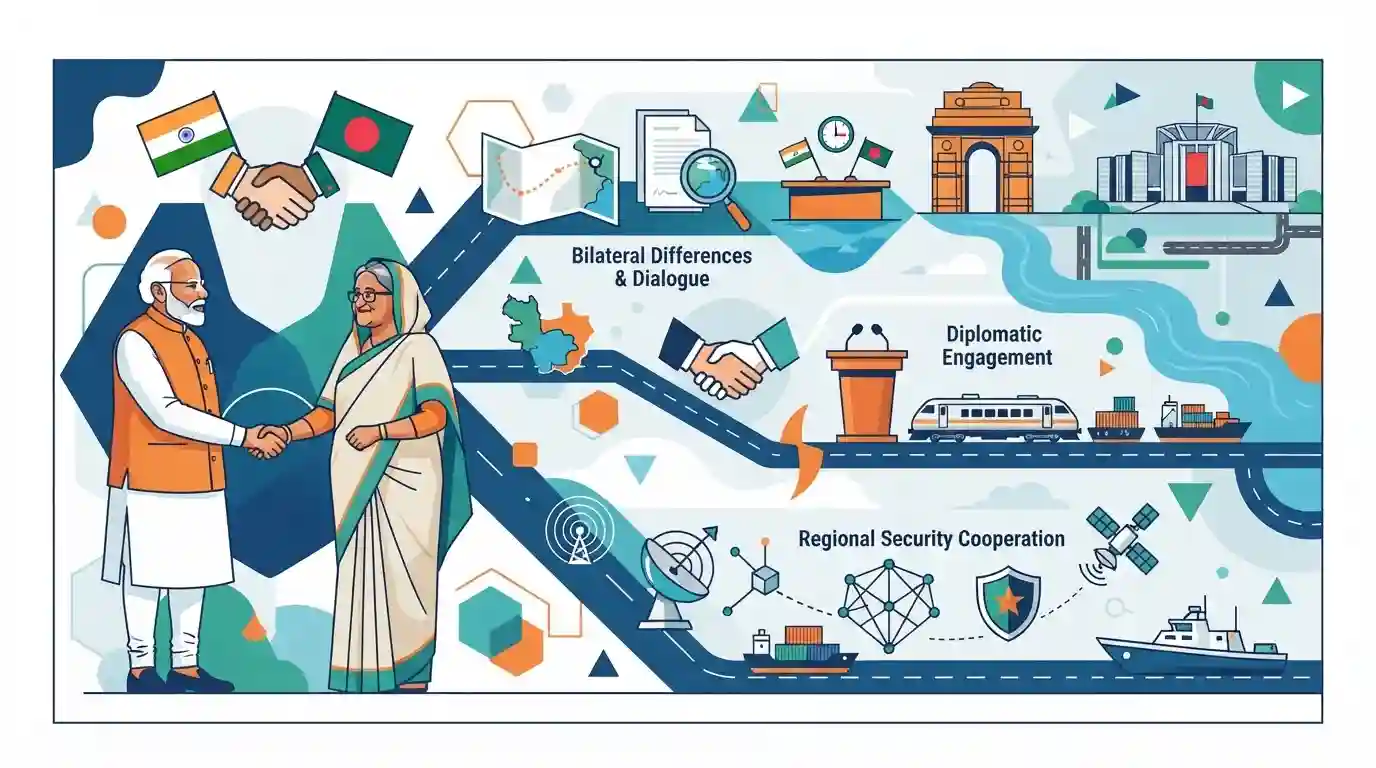
An analysis of India-Bangladesh relations highlighting Prime Minister Narendra Modi's approach toward addressing bilateral differences, diplomatic engagement, and regional security cooperation between New Delhi and Dhaka.
Key Points
- Prime Minister Narendra Modi provided an opportunity for the Bangladesh leadership to engage in dialogue and settle bilateral differences.
- India-Bangladesh bilateral relations encompass strategic connectivity, economic cooperation, security concerns, and management of transboundary river waters.
- Geopolitical stability in South Asia is strongly linked to cooperative diplomatic engagement between India and Bangladesh.
Important Terms
Ganga Waters Treaty

A 30-year bilateral accord signed in 1996 governing dry-season water sharing of the Ganges River between India and Bangladesh through the Farakka Barrage.
UPSC context
WBCS Paper II (International Relations): Tests understanding of transboundary water diplomacy, hydro-politics, and bilateral ties between India and Bangladesh.
Teesta River Water Sharing Agreement
A long-pending bilateral dispute regarding the dry-season allocation of the transboundary Teesta River between India and Bangladesh, heavily impacting West Bengal's irrigation.
UPSC context
WBCS Paper II (India and its Neighborhood): Crucial for West Bengal civil services aspirants due to state-specific geopolitical and irrigation sensitivities.
Prelims Trap
The Teesta River Water Sharing Agreement was successfully signed and ratified during recent diplomatic summits.
Aspirants often assume the Teesta Water Sharing Agreement has been formally ratified by both nations, whereas it remains stalled due to domestic political opposition in India.
Static Concepts Connected
What are the key bilateral treaties and transboundary river mechanisms between India and Bangladesh?
- Ganga Treaty: Signed in 1996 for a 30-year period, governing the dry-season sharing of Ganga waters at Farrakka.
- Teesta Impasse: Remains pending due to objections from the West Bengal government regarding downstream water availability in summer.
- Land Boundary Agreement: Operationalised in 2015 to resolve decades of citizenship limbo for enclave residents along the border.
Cross-Topic Patterns
Transboundary Rivers and Federal Politics
Bilateral water disputes intersect with transboundary river management under international law and domestic federalism in West Bengal.
Neighbourhood First and North-East Integration
Strategic connectivity across Bangladesh is crucial for securing India's North-Eastern states via the Act East policy.

Expect statement-based questions on the Ganga Waters Treaty renewal timeline or Teesta River sharing impasse in Prelims.
Linked PYQs · 3
Linked PYQs · 3
- 2018WBCS_PRELIMSGS1
Geomorphologists opine that change of the course of the Kosi river resulted in
- 2015WBCS_PRELIMSGS1
The North flowing rivers of West Bengal are
- 2023WBCS_PRELIMSGS1
Which neighboring country of India has passed its first Citizenship Amendment Bill?
