Left Wing Extremism Decline in Gadchiroli District
Source:Indian Express ↗
Why It Matters
Left Wing Extremism has historically been considered India's most severe internal security challenge. The near-elimination of Naxal influence in Gadchiroli serves as a successful case study of the government's dual strategy of aggressive security operations and developmental outreach, a recurring and high-priority theme in the GS Paper 3 syllabus.
Summary
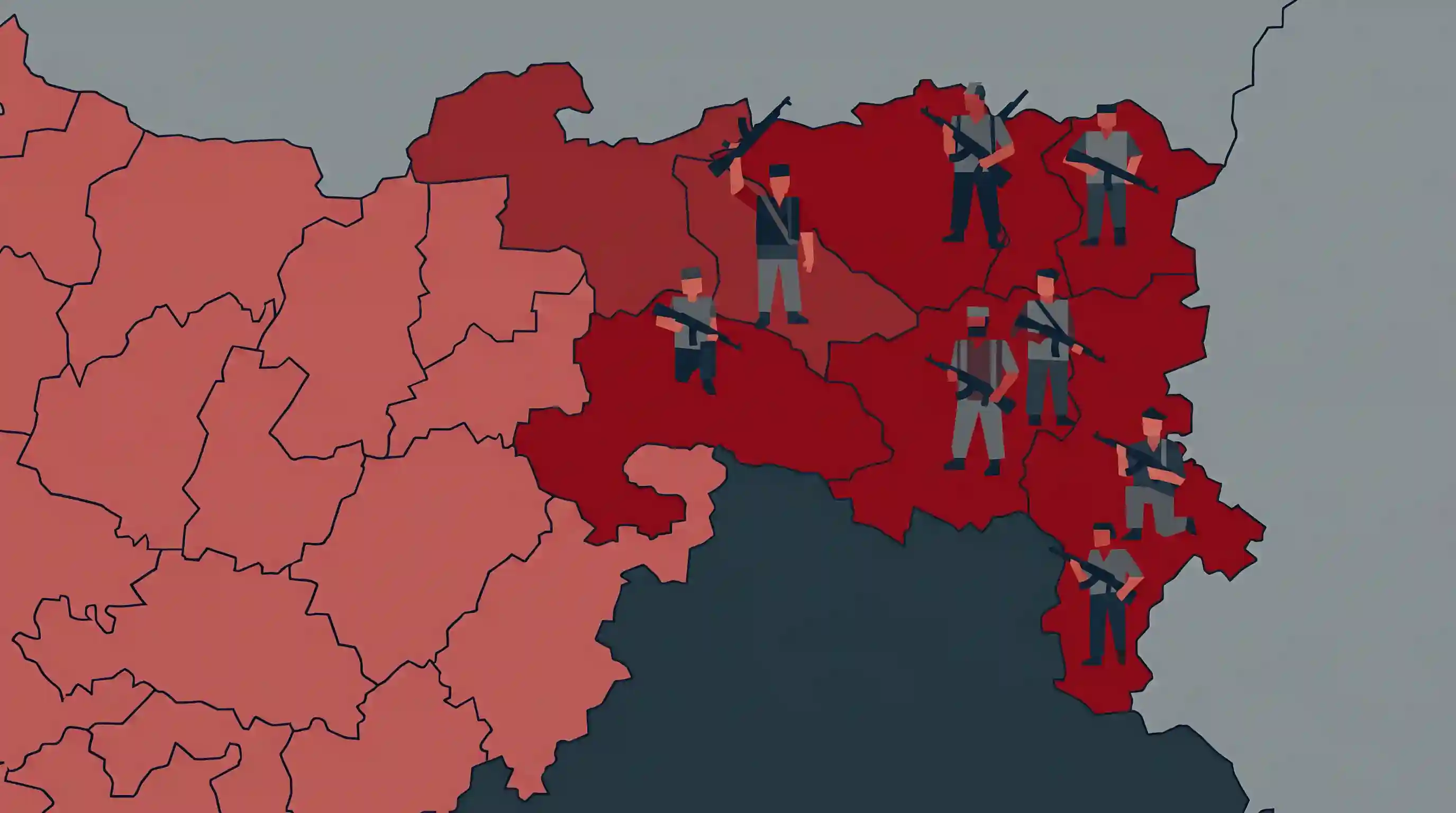
According to the police, the number of active armed Naxal cadres in Maharashtra's Gadchiroli district has significantly dwindled to merely 24 individuals. This sharp decline in Left Wing Extremism (LWE) in what used to be a major red corridor hotbed highlights the success of a multi-pronged approach involving intensified security operations, development initiatives, and effective surrender policies.
Key Points
- The number of active armed Naxal cadres in Maharashtra's Gadchiroli district has dropped to just 24, indicating a near-eradication of Left Wing Extremism (LWE) in the region.
- Sustained intelligence-based anti-Naxal operations by specialized security forces have played a pivotal role in neutralizing the threat.
- Government initiatives focusing on infrastructural development, road connectivity, and attractive surrender-cum-rehabilitation policies have successfully mainstreamed former cadres.
- This regional success aligns with the Union Government's broader target to completely eliminate Left Wing Extremism from India by 2026.
Important Terms
Left Wing Extremism (LWE)

An armed insurgency led by Maoist ideologies aiming to overthrow the state through "protracted people’s war." It primarily thrives in underdeveloped tribal regions with significant socio-economic disparities.
UPSC context
GS-III: Internal Security. Tests understanding of the core threat and the link between underdevelopment and extremism.
SAMADHAN Doctrine
A 2017 strategic framework by the Ministry of Home Affairs to combat LWE using eight pillars: Smart Leadership, Aggressive Strategy, Motivation, Actionable Intelligence, Dashboard-based KPIs, Harnessing Technology, Theatre-specific Action Plans, and Cutting-off Finance.
UPSC context
GS-III: Internal Security. Essential for discussing the government’s integrated multi-pronged approach to domestic security challenges.
C-60 Commandos
An elite specialized combat unit of the Maharashtra Police, established in 1990 to counter Naxalism in Gadchiroli. It recruits local tribals to leverage their knowledge of local terrain, language, and culture.
UPSC context
GS-III: Role of State Actors. Case study of successful specialized district-level forces in counter-insurgency operations.
Red Corridor
A geographical belt in eastern, central, and southern India where Naxalite-Maoist influence has been strongest. It historically spans states like Chhattisgarh, Jharkhand, and Odisha, often characterized by severe poverty.
UPSC context
GS-III: Internal Security. Tests awareness of the regional spread and contraction of the Maoist movement.
Surrender and Rehabilitation Policy
A strategy to encourage extremists to renounce violence by providing financial incentives, vocational training, and housing support. It aims to dismantle insurgent networks by integrating cadres into the mainstream.
UPSC context
GS-III: Internal Security. Evaluates non-kinetic methods and conflict resolution strategies in restoring peace.
Prelims Trap
Anti-Naxal operations are under the exclusive jurisdiction of the Union Ministry of Home Affairs.
Police and Public Order are State subjects. The Centre supplements state efforts (e.g., CAPFs, funding), but state police units spearhead anti-Naxal operations.
Static Concepts Connected
What are the operational pillars of the SAMADHAN doctrine?
- Kinetic Action: Smart leadership, aggressive strategy, and motivation/training of forces.
- Intel & Tech: Actionable intelligence, dashboard-based KPIs, and harnessing technology (drones, trackers).
- Choking Funds: Ensuring 'No access to financing' to cripple insurgent logistics and arms procurement.
What structural factors historically fueled LWE in India?
- Development Deficit: Lack of road connectivity, healthcare, and education in remote, forested tribal districts.
- Land Alienation: Displacement of tribals by large mining/industrial projects without adequate rehabilitation or compensation.
- Governance Void: Weak administrative presence allowing Naxalites to run parallel 'Janatana Sarkars' (people's courts).
Cross-Topic Patterns
LWE decline + Forest Governance (PESA/FRA)
The decline in LWE overlaps directly with improved implementation of PESA and FRA 2006, resolving the 'development deficit' and land alienation that historically fueled the insurgency.
State-led specialized anti-insurgency forces
Maharashtra's C-60 success mirrors Andhra's Greyhounds and Chhattisgarh's DRG, proving that local tribal recruitment in state-led specialized police units out-performs purely centralized CAPF deployment.

With the 2026 LWE elimination target, expect a GS3 Mains question evaluating SAMADHAN's dual kinetic-developmental success.
Linked PYQs · 3
Linked PYQs · 3
- 2018MainsGS3
Left Wing Extremism (LWE) is showing a downward trend, but still affects many parts of the country. Briefly explain the Government of India's approach to counter the challenges posed by LWE.
- 2025MainsGS3
The Government of India recently stated that Left Wing Extremism (LWE) will be eliminated by 2026. What do you understand by LWE and how are the people affected by it? What measures have been taken by the government to eliminate LWE?
- 2015MainsGS3
The persisting drives of the Government for development of large industries in backward areas have resulted in isolating the tribal population and the farmers who face multiple displacements. With Malkangiri and Naxalbari foci, discuss the corrective strategies needed to win the Left Wing Extremism (LWE) doctrine affected citizens back into the mainstream of social and economic growth.
