Gujarat Reports Chandipura Virus Pediatric Fatalities
Source:The Hindu ↗
આ શા માટે મહત્વનું છે
Vector-borne diseases like the Chandipura virus pose recurrent seasonal threats in India, particularly to vulnerable pediatric populations. Understanding the transmission dynamics, geographical origin, and vector control strategies is crucial for epidemic preparedness and public health administration.
સારાંશ
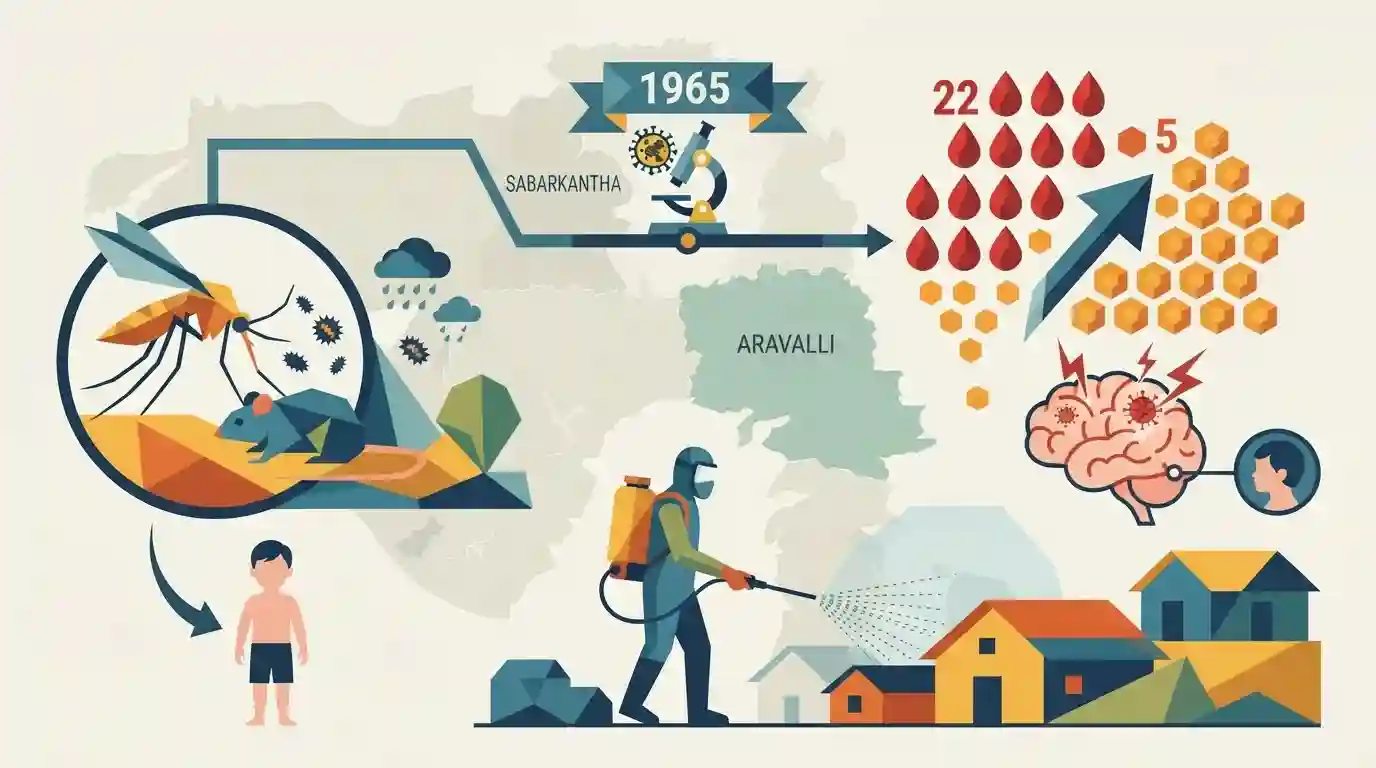
Gujarat is currently facing a deadly outbreak of the Chandipura virus, which has claimed the lives of 22 children and led to 51 suspected cases. Transmitted primarily by sandflies, the virus causes rapidly progressing encephalitis (brain inflammation) in children under 15 years old. In response to the spike in infections, the state's health department has launched extensive pesticide spraying campaigns to curb vector populations, particularly in rural and animal husbandry regions. The virus, first discovered in 1965 in Maharashtra, highlights the ongoing public health challenges posed by vector-borne zoonotic diseases during the monsoon.
મુખ્ય મુદ્દા
- Gujarat has recorded 22 pediatric deaths and 51 suspected cases of Chandipura virus (CHPV) this monsoon season.
- Chandipura virus causes severe encephalitis (brain inflammation) and primarily affects children under the age of 15.
- The pathogen is predominantly transmitted by vectors such as sandflies, with outbreaks often clustered around areas of animal husbandry.
- The virus was first identified in 1965 in Chandipura village of Nagpur district, Maharashtra.
- The state health department has initiated aggressive vector control measures, including pesticide spraying targeting sandflies in rural areas.
મહત્વપૂર્ણ શબ્દો
Chandipura Virus (CHPV)

A deadly, vector-borne RNA virus of the Rhabdoviridae family, primarily transmitted by sandflies, that causes rapid-onset brain inflammation (encephalitis) and high mortality in children under 15.
UPSC context
GS Paper III (Science & Technology - Health); tests understanding of emerging viral zoonoses, pathogenesis, and public health interventions.
National Institute of Virology (NIV)
A premier Indian virology research institute in Pune, funded by the ICMR, specializing in diagnosing, researching, and monitoring viral outbreaks and emerging public health threats.
UPSC context
GS Paper III (Science & Technology); tests awareness of India's health infrastructure, premier research institutions, and epidemic preparedness.
Acute Encephalitis Syndrome (AES)
A severe clinical condition characterized by rapid-onset inflammation of the brain, causing fever and mental confusion, triggered by viral, bacterial, or parasitic infections like Chandipura.
UPSC context
GS Paper II & III (Social Justice/Health and S&T); tests knowledge of endemic public health challenges and diagnostic management.
Vector-Borne Diseases
Illnesses transmitted to humans and animals by blood-feeding arthropod vectors, such as sandflies, mosquitoes, and ticks, whose outbreaks are highly influenced by monsoon conditions.
UPSC context
GS Paper III (Science & Technology/Environment); tests understanding of epidemiological dynamics, vector control, and climate change links.
પ્રિલિમ્સ ટ્રેપ
Chandipura virus is primarily transmitted by Aedes or Culex mosquitoes during the monsoon season.
While outbreaks peak during the monsoon, Chandipura is transmitted by Phlebotomine sandflies, not mosquitoes. It belongs to the Rhabdoviridae family, unlike mosquito-borne Flaviviruses (like JE).
સંલગ્ન સ્થિર ખ્યાલો
What is Acute Encephalitis Syndrome (AES) and its common causes?
- Definition: A clinical syndrome characterized by an acute onset of fever and severe neurological manifestations like brain inflammation, confusion, or coma.
- Causative agents: Caused by a wide range of viruses (Japanese Encephalitis, Chandipura, Nipah), bacteria, fungi, parasites, and even non-infectious chemical toxins.
- Vulnerability: It disproportionately affects children and young adults whose central nervous systems are still developing and highly vulnerable.
Which major diseases in India are transmitted by sandflies versus mosquitoes?
- Sandfly vectors: Female Phlebotomine sandflies transmit Chandipura virus and Kala-azar (Visceral Leishmaniasis). They breed in damp, dark places like animal sheds.
- Mosquito vectors: Aedes transmits Dengue and Chikungunya, Culex transmits Japanese Encephalitis, and Anopheles transmits Malaria. They generally breed in stagnant water.
આંતર-વિષય પેટર્ન
Vector habitats and One Health
Sandflies breed in cattle sheds and mud houses. Controlling Chandipura requires integrating rural sanitation and animal husbandry practices, closely aligning with the One Health approach.
Monsoon and disease epidemiology
Erratic monsoon patterns and increased rural humidity expand the breeding windows for sandflies, complicating India's vector-borne disease management and altering traditional outbreak epidemiology.

Expect a 'disease-vector' match-the-following question in 2026 contrasting Chandipura (sandfly) with Japanese Encephalitis (mosquito).
સંલગ્ન PYQ · 2
સંલગ્ન PYQ · 2
- 2025GPSC_PRELIMSGS1
Which of the following countries was recently in the news regarding an outbreak of human metapneumovirus (HMPV)?
- 2025GPSC_PRELIMSGS1
______ initiated its withdrawal from the World Health Organization (WHO) on January 20, 2025 citing mishandling of the COVID-19 pandemic financial disparities and political influence concerns.
