NEET Aspirant Dies by Suicide in Sikar Coaching Hub
Source:etvbharat ↗
Why It Matters
The repeated cases of student suicides in Rajasthan's educational hubs (Kota, Sikar) draw crucial attention to the socio-psychological pressures of hyper-competitive exams. For RPSC RAS candidates, this touches upon social sector issues, youth welfare, and the need for structural reforms in the state's unregulated coaching industry.
Summary
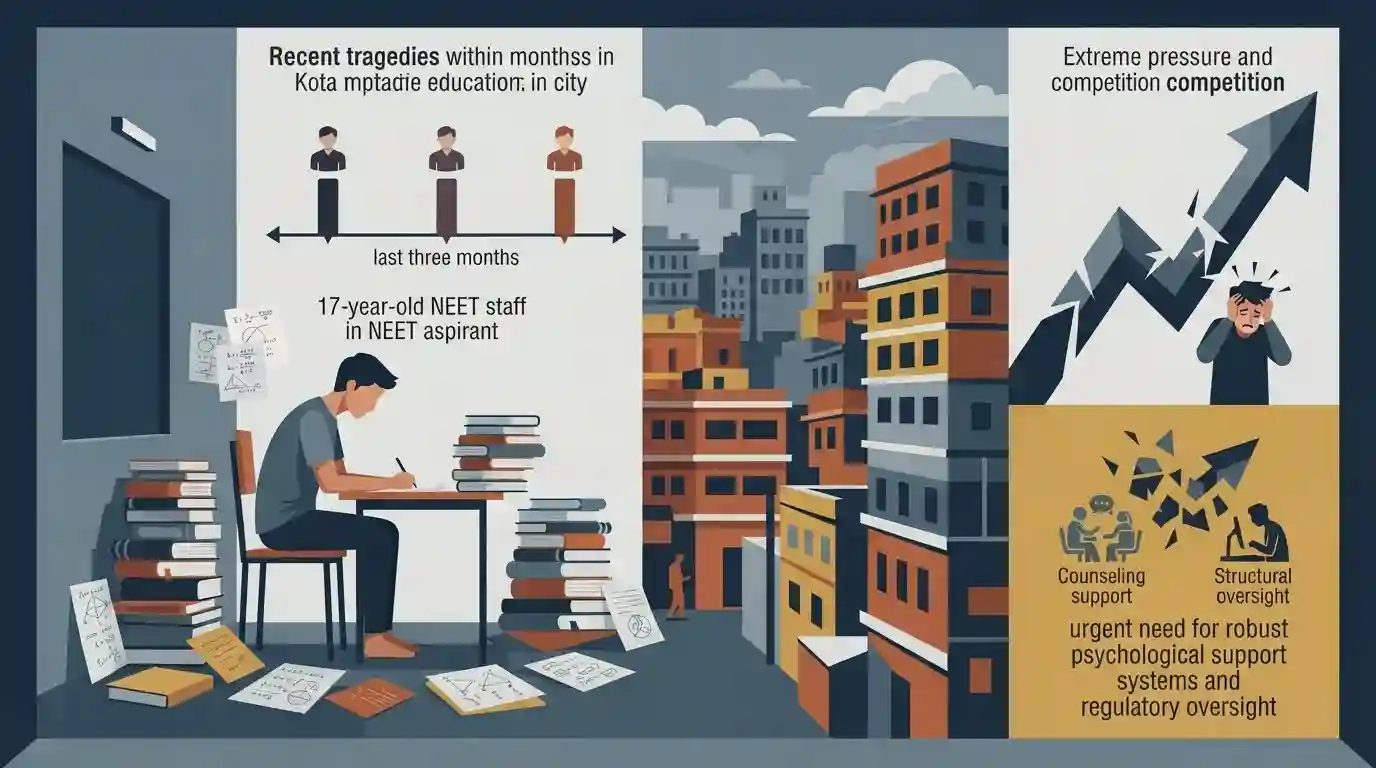
A 17-year-old NEET aspirant from Jaipur Rural tragically ended his life in a hostel in Sikar, Rajasthan. This incident marks the third student suicide in the city within the last three months, raising serious concerns about the mental health and well-being of students in coaching hubs. No suicide note or mobile phone was found, and the police are actively investigating the circumstances. The recurring tragedies in educational hubs like Sikar and Kota highlight the extreme stress associated with competitive exams and the urgent need for robust psychological support systems and regulatory oversight.
Key Points
- A 17-year-old NEET aspirant from Jaipur Rural died by suicide in a hostel in Sikar, Rajasthan.
- This marks the third incident of student suicide in Sikar over the past three months, highlighting a grim pattern in the coaching hub.
- Police investigations are ongoing; however, neither a suicide note nor the student’s mobile phone was recovered from the scene.
- The recurring incidents underscore the intense psychological pressure and mental health crisis among students preparing for highly competitive entrance exams in Rajasthan's prominent coaching centers like Sikar and Kota.
Important Terms
National Eligibility Entrance Test (NEET)

A nationwide entrance examination in India for students seeking admission to undergraduate medical and dental programs. It is highly competitive and often requires rigorous preparation.
UPSC context
Important for GS Paper II (Education, Human Resources) highlighting issues of exam governance, stress, and youth mental health.
Youth Mental Health Crisis
A significant public health issue involving high rates of stress, anxiety, and depression among adolescents and young adults, often driven by academic pressure and digital addiction.
UPSC context
Relevant to GS Paper I (Social Issues) and GS Paper II (Health), emphasizing the need for robust support systems.
Coaching Institute Regulations
The oversight and management of private educational businesses. Central and state guidelines aim to curb commercialization, ensure safety, and mandate psychological support for students.
UPSC context
Crucial for GS Paper II (Government Policies and Interventions, Education) as a response to student suicides and commercialization.
Prelims Trap
The Central Guidelines for Regulation of Coaching Center 2024 are legally binding statutory rules enforceable by central police forces.
The Guidelines are advisory model guidelines. Because education is concurrent and local business licensing is state-specific, central guidelines require state legislation to have statutory teeth.
Static Concepts Connected
What is the constitutional status of Education in the Indian federal framework?
- Concurrent List status: Moved from the State List to the Concurrent List via the 42nd Constitutional Amendment Act of 1976, allowing both Centre and States to legislate.
- Article 21A: Inserted by the 86th Amendment Act of 2002, making free and compulsory education for ages 6-14 a Fundamental Right.
- DPSPs and Duties: Article 45 directs early childhood care, while Article 51A(k) mandates parents to provide education opportunities.
What are the core pillars of India's legislative framework on mental health?
- Mental Healthcare Act 2017: Effectively decriminalized suicide attempts by creating a presumption of severe stress, and legally guaranteed access to mental healthcare.
- NMHP and DMHP: Decentralized mental healthcare to primary health centers through the National Mental Health Programme (NMHP) and District Mental Health Programme (DMHP).
Cross-Topic Patterns
Demographic dividend vs shadow education
Hyper-competitive coaching industries extract economic rents while degrading youth mental health, turning potential demographic gains into structural public health crises.
Article 21 and mental healthcare access
Judicial expansions of Article 21 (Right to Life) include mental well-being, placing positive obligations on states to regulate high-stress commercial environments.

Mains 2026 may ask to critically analyze the rise of 'shadow education' systems and their regulatory conflict under Concurrent List jurisdictions.
Linked PYQs · 1
Linked PYQs · 1
- 2025RPSC_PRELIMSGS1
What is the correct sequence of districts in Rajasthan based on the decreasing order of total literacy rate (2011 Census)?
