Visakhapatnam Rally Marks Pingali Venkayya Birth Anniversary
Source:The Hindu ↗
ఇది ఎందుకు ముఖ్యం
Pingali Venkayya is a highly significant historical figure from Andhra Pradesh whose design formed the basis for the Indian National Flag. His contributions are highly relevant for APPSC Group 1 Prelims under the 'Modern History of India and Andhra Pradesh' syllabus.
సారాంశం
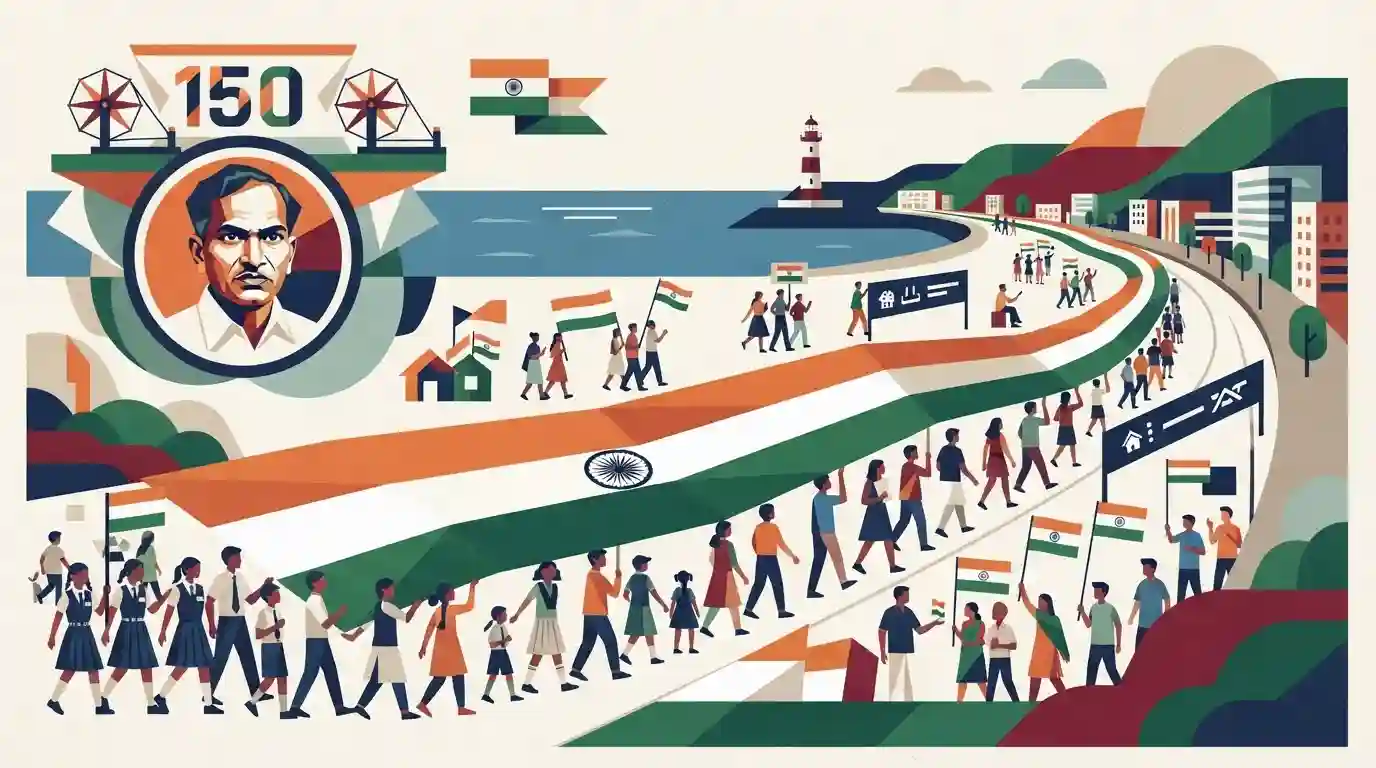
A 150-metre flag rally was organised in Visakhapatnam to commemorate the 150th birth anniversary of Pingali Venkayya, the designer of the Indian National Flag. The event, held as part of the nationwide 'Har Ghar Tiranga' campaign (August 9-15), witnessed participation from students and citizens paying tribute to the prominent Telugu freedom fighter's legacy.
ముఖ్య అంశాలు
- A 150-metre-long tricolour rally was organised in Visakhapatnam to mark the 150th birth anniversary of Pingali Venkayya.
- Pingali Venkayya, a prominent freedom fighter from Andhra Pradesh, is widely recognised as the designer of the Indian National Flag.
- The rally was conducted as part of the 'Har Ghar Tiranga' campaign, which runs from August 9 to August 15 to instill a sense of patriotism among citizens.
ముఖ్యమైన పదాలు
Pingali Venkayya

Freedom fighter from Andhra Pradesh and polymath who designed the initial version of India's National Flag (the Tricolour), which was later officially adopted with minor modifications.
UPSC context
GS Paper I: Modern Indian History and Important Personalities; tests contributions of unsung freedom fighters.
Har Ghar Tiranga
A nationwide campaign initiated by the Ministry of Culture under Azadi Ka Amrit Mahotsav to encourage citizens to hoist the National Flag at their homes, fostering personal patriotism.
UPSC context
GS Paper II: Government Policies and Interventions; tests national integration initiatives and citizen civic participation.
Flag Code of India, 2002
A consolidated set of laws, conventions, and guidelines governing the correct display, usage, and respect of the Indian National Flag by citizens, private organizations, and governments.
UPSC context
GS Paper II: Indian Polity and Constitution; tests provisions related to national symbols and fundamental duties.
Prevention of Insults to National Honour Act, 1971
An Act of Parliament that penalizes acts of desecration, disrespect, or insult directed towards national symbols, including the National Flag, National Anthem, and the Constitution.
UPSC context
GS Paper II: Indian Polity; tests legal frameworks safeguarding national pride, public symbols, and constitutional ethics.
Constituent Assembly of India
The body of elected representatives tasked with drafting the Constitution of India, which also officially adopted the modern Tricolour as the National Flag on July 22, 1947.
UPSC context
GS Paper II: Indian Polity and Historical Underpinnings; tests transition to independence and constitutional development.
Azadi Ka Amrit Mahotsav
An initiative of the Government of India launched to celebrate and commemorate 75 years of progressive independent India and the glorious history of its people, culture, and achievements.
UPSC context
GS Paper II: Government Policies; tests state-sponsored programs aimed at celebrating heritage and promoting patriotic values.
ప్రిలిమ్స్ ఉచ్చు
"Pingali Venkayya designed the exact current Indian National Flag containing the Ashoka Chakra."
Venkayya designed the 'Swaraj flag' containing a charkha. The Constituent Assembly modified his design on July 22, 1947, replacing the charkha with the Ashoka Chakra.
అనుసంధానమైన స్థిర భావనలు
How did the Indian National Flag evolve before its final adoption in 1947?
- 1921 Vijayawada Session: Pingali Venkayya presented the initial Swaraj flag (red and green, later with white added) featuring a charkha to Mahatma Gandhi.
- 1931 Karachi Resolution: The Indian National Congress formally adopted a resolution for a tricolour (saffron, white, green) with a central charkha.
- July 1947 Adoption: The Constituent Assembly officially adopted the current flag, modifying Venkayya's design by replacing the charkha with the Ashoka Chakra.
What are the key recent amendments to the Flag Code of India (2002)?
- Material restrictions lifted: The government amended the code to allow machine-made and polyester flags, ending the strict mandate that only hand-spun, hand-woven khadi could be used.
- Day and night display: Citizens are now legally permitted to hoist the National Flag day and night at private homes or public places, removing the previous sunrise-to-sunset limitation.
అంతర-అంశ నమూనాలు
SHGs + Har Ghar Tiranga
The campaign extensively utilizes rural women's Self-Help Groups for massive flag production, brilliantly merging a patriotic cultural initiative with rural employment and women's economic empowerment.
Andhra's Unsung Freedom Fighters
Pingali Venkayya’s 150th anniversary aligns with recent massive commemorations of Alluri Sitarama Raju, highlighting a clear trend of UPSC prioritizing regional freedom fighters from Andhra Pradesh.

Pingali Venkayya's 1921 Swaraj flag design combined with recent Flag Code amendments allowing polyester makes a prime History-Polity MCQ.
అనుసంధాన PYQలు · 1
అనుసంధాన PYQలు · 1
- 1990APPSC_PRELIMSGS1
The Telugu personality who prepared a design for the National Flag which was later adopted as the National Flag with some changes.
