Protein Signature Blood Test for Early Lung Cancer Detection
Source:The Hindu ↗
Why It Matters
Understanding advancements in biotechnology, specifically biomarkers and monoclonal antibodies, is crucial for UPSC candidates as it directly relates to GS3 topics on scientific developments, everyday applications of science, and the management of public health challenges (NCDs).
Summary
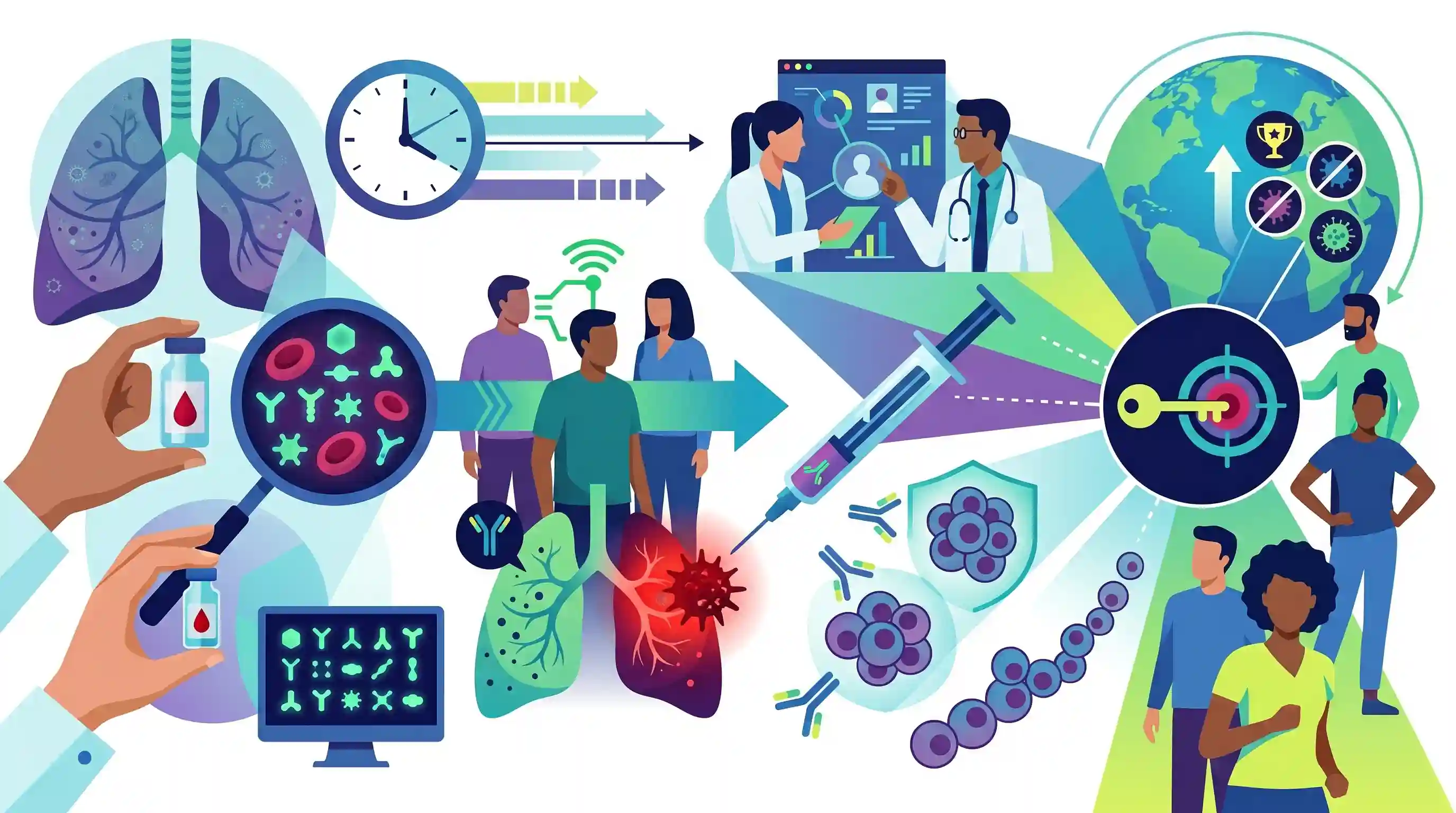
Researchers have identified a 14-protein signature in the blood that can predict a person's risk of developing lung cancer years earlier than current diagnostic methods. By tracking these specific biomarkers, healthcare providers can screen high-risk populations more effectively. The early warning provided by this test could allow for preventive treatments, such as the administration of the monoclonal antibody Canakinumab, to halt or delay the cancer's progression. This breakthrough underscores the vital role of applied biotechnology and biomarker research in advancing precision medicine and tackling the global burden of non-communicable diseases.
Key Points
- A novel blood test utilizing a 14-protein signature can predict the onset of lung cancer years before clinical diagnosis.
- The test identifies specific circulating protein biomarkers that signal early physiological changes associated with cancer development.
- Early prediction enables proactive interventions, potentially using targeted therapies like the monoclonal antibody Canakinumab to prevent disease progression.
- This development marks a significant advancement in precision medicine, shifting the paradigm of cancer care from late-stage treatment to early detection and prevention.
Prelims Trap
"Monoclonal antibodies are naturally occurring immune cells extracted directly from the blood of recovered patients."
Monoclonal antibodies are artificial, laboratory-engineered proteins designed to mimic the immune system's attack on specific antigens, not naturally occurring cells.
Static Concepts Connected
What is a Liquid Biopsy and what makes it advantageous?
- Non-invasive: Analyzes blood or other body fluids instead of requiring the surgical extraction of solid tissue.
- Biomarker detection: Identifies circulating tumor cells (CTCs), cell-free DNA (cfDNA), or protein signatures released by tumors into the bloodstream.
- Real-time monitoring: Enables continuous, repeatable tracking of cancer progression and response to therapies over time.
How do Monoclonal Antibodies (mAbs) function in targeted therapy?
- Lab-created: They are man-made molecules engineered in a laboratory to serve as substitute antibodies.
- High specificity: They are designed to bind to one highly specific substance (antigen) on targeted cells, minimizing damage to healthy cells.
- Mechanism of action: They can flag cancer cells for immune destruction, block growth signals, or deliver targeted radiation/toxins directly.
Cross-Topic Patterns
Diagnostics + Public Health Economics
Early detection tools like protein-signature blood tests directly address India's high Out-of-Pocket Expenditure (OOPE), which is largely driven by late-stage curative treatments for Non-Communicable Diseases (NCDs).
Proteomics and Genomics applications
While genomics maps fixed DNA, proteomics maps dynamic proteins. UPSC frequently tests the distinctions and complementary applications of these '-omics' technologies in precision medicine.

Expect a multi-statement question in 2026 contrasting liquid biopsy (proteins/cfDNA) with traditional biopsy and monoclonal antibodies.
Linked PYQs · 3
Linked PYQs · 3
- 2025PrelimsGS1
With reference to monoclonal antibodies, often mentioned in news, consider the following statements : I. They are man-made proteins. II. They stimulate immunological function due to their ability to bind to specific antigens. III. They are used in treating viral infections like that of Nipah virus. Which of the statements given above are correct?
- 2017MainsGS3
Stem cell therapy is gaining popularity in India to treat a wide variety of medical conditions including Leukaemia, Thalassemia, damaged cornea and severe burns. Describe briefly what stem cell therapy is and what advantages it has over other treatments?
- 2021MainsGS3
What are the research and developmental achievements in applied biotechnology? How will these achievements help to uplift the poorer sections of the society?
