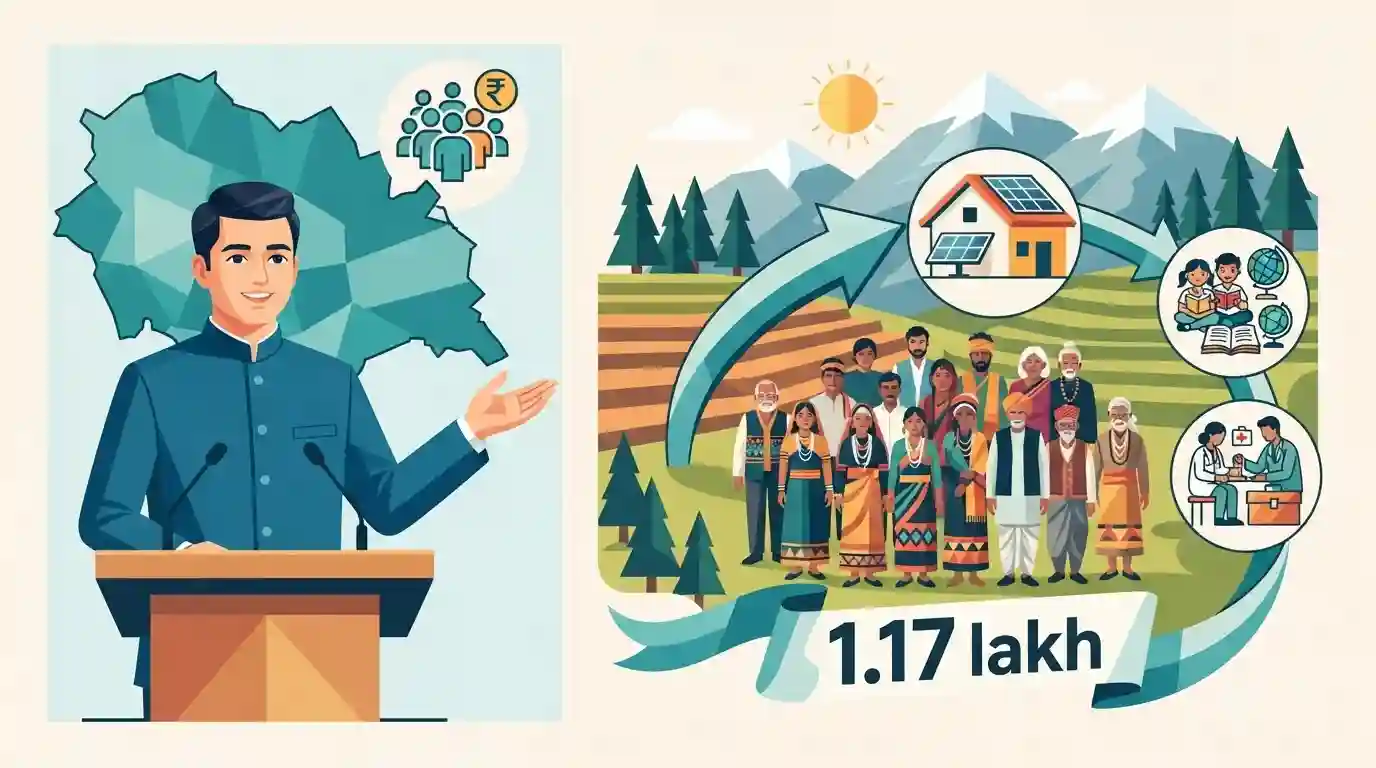
Himachal Welfare Schemes to Benefit Over 1.17 Lakh Tribal People
Source:tribuneindia ↗
Why It Matters
Relevant for HPAS aspirants to track welfare measures, tribal population statistics, and social development schemes specific to Himachal Pradesh.
Summary
Minister or government official Negi announced that around 1.17 lakh tribals in Himachal Pradesh will benefit from targeted government welfare and development schemes, aiming to improve socio-economic conditions in tribal areas.
Key Points
- Over 1.17 lakh tribal people in Himachal Pradesh are set to benefit from various state government welfare schemes.
- The initiative highlights the state administration's focus on bridging developmental gaps in tribal regions and remote pockets.
- Such welfare initiatives form a core component of HP's socio-economic planning for scheduled tribes and marginalized communities.
Important Terms
Dharti Aaba Tribal Village Development Campaign

A flagship campaign launched to deliver benefits of over 35 central and state welfare schemes to around 1.17 lakh tribal individuals across targeted villages in Himachal Pradesh.
UPSC context
Important for HPAS (Social Welfare / Vulnerable Sections): Tests knowledge of special governance campaigns targeting tribal development in Himachal Pradesh.
Tribal Area Development Program (TADP)
The mechanism used by the state government to allocate dedicated funds and execute welfare programs for the socio-economic development of tribal regions and communities in HP.
UPSC context
Important for HPAS (Himachal Pradesh Economy and Governance): Tests administrative funding mechanisms for marginalized regions like Lahaul-Spiti, Kinnaur, and Pangi-Bharmour.
Tribal Development Minister (HP)
The executive head of the Tribal Development Department in Himachal Pradesh responsible for formulating and reviewing policies, welfare allocations, and administrative outreach for tribal populations.
UPSC context
Important for HPAS (HP Polity and Governance): Tests awareness of key state ministerial portfolios and executive policy announcements regarding vulnerable communities.
Tribal Sub-Plan (TSP)
The sub-state planning approach initiated in HP in 1974-75 ensuring dedicated financial outlays from the state budget exclusively for the development of notified scheduled areas.
UPSC context
Important for HPAS (Economy and Social Welfare): Essential concept for understanding budgetary allocations and developmental planning for Scheduled Tribes in Himachal Pradesh.
Static Concepts Connected
What are the constitutional provisions for the administration of Scheduled Areas in Himachal Pradesh?
- Fifth Schedule: Article 244(1) and Fifth Schedule apply to certain scheduled areas in Himachal Pradesh, ensuring protection of tribal land and culture.
- Tribal Advisory Council: Tribal Advisory Council (TAC) advises on matters concerning the welfare and advancement of Scheduled Tribes in the state.
- Sub-Plan Allocation: Single-line administration and special component plans ensure targeted flow of financial resources to tribal sub-plans.
Cross-Topic Patterns
Tribal Welfare & Constitutional Safeguards
HP's tribal welfare schemes intersect with the Fifth Schedule constitutional provisions and special central funding mechanisms like the Tribal Area Development Programme.
Nautor Land Policy & Scheduled Areas
Land reforms in scheduled areas like Nautor allocations balance traditional rights with modern development and out-migration curbs.

Expect a statement-based question on HP tribal welfare allocations, specific ministerial portfolios, and central-state collaborative schemes.
Linked PYQs · 1
Linked PYQs · 1
- 2025HPAS_PRELIMSGS1
Given below are two statements : Statement I : The Gujjars of Himachal Pradesh are both Hindus and Muslims. Statement II : Lahaulis and Spitianis have Mongoloid features. In the light of the above statements, choose the most appropriate answer from the options given below :
